
Archive travel feature: references to openings, flights, population figures and restaurant availability reflect the period described in the original article, including 2020–2022. Check current arrangements before travelling.
The island’s appeal is irresistible. This journey takes in Ciutadella and Mahón, unspoilt beaches and the essentials for making the most of a visit.
You do not simply go to Menorca: you return. However often you visit, it can still feel like the first time. From a boat or aircraft, the first glimpse of its green, gently rocky outline surrounded by blue is a promise of the pleasures ahead. The northernmost and second-largest of the Balearic Islands, it is third in population. Its relatively quiet character has helped preserve its natural surroundings, identity and commitment to local produce. Its land and sea form a UNESCO Biosphere Reserve; its skies have Starlight recognition for stargazing, while its food culture was celebrated through its designation as European Region of Gastronomy for 2022.
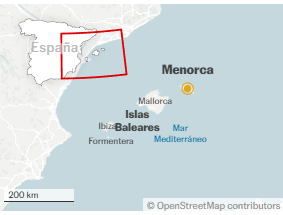
Within an island measuring around 53 kilometres long and 19 wide, there is room for a remarkable sense of belonging. In his poem Menorca, Miquel Martí i Pol evokes an island poised at the edge of time, turning the warmth of the east into light, sand, sea, stone and mystery. It is one of those places where everything seems to belong, and where visitors seldom feel out of place. In Mediterranean: A Cultural Landscape, Predrag Matvejević suggests that a Mediterranean identity is something chosen and achieved rather than simply inherited. Menorca inspires just such feelings. Its appeal to thoughtful travellers gained another dimension with the opening of Hauser & Wirth Menorca on 17 July 2021, with an exhibition by African American artist Mark Bradford. The original feature described 1,500 square metres across eight galleries, a garden featuring works by Chillida and Louise Bourgeois, a shop and a restaurant. Its setting is the former naval hospital on Illa del Rei, an islet in Mahón harbour. Architect Luis Laplace led the restoration, while the gardens were designed by Piet Oudolf, known for his work on New York’s High Line.
Interest in Menorca was growing rapidly at the time of the original feature. It reported a sixteenfold rise in French visitors over ten years, placing them ahead of visitors from the UK, Italy and Germany in the figures at the end of 2020. New places to stay ranged from restored historic country estates, including those of Les Domaines de Fontenille, Torralbenc and Es Bec d’Aguila, to restored palaces such as Can Faustino in Ciutadella and boutique hotels such as Cristine Bedfor in Mahón. The article also reported Ryanair’s announcement of nine new direct summer routes, three domestic and six European, including Bordeaux, Marseille and Toulouse. Transavia was adding services from Paris, Lyon and Nantes. These are historical references, rather than a current flight schedule.
Menorca’s natural appeal extends well beyond its beaches, even if they are the main summer attraction. The original article described the population rising from around 96,000 to 200,000 during the season. To enjoy the coves, one of the first things to understand is the wind. Names such as tramuntana, llevant, marinada, migjorn and mistral soon become familiar, because choosing a beach means checking its exposure. A northerly wind often favours the south coast, while a southerly may favour the north. Local advice and the day’s conditions help you choose a sheltered spot; an islander can often suggest both a beach and the best time to move on.
From beach to beach
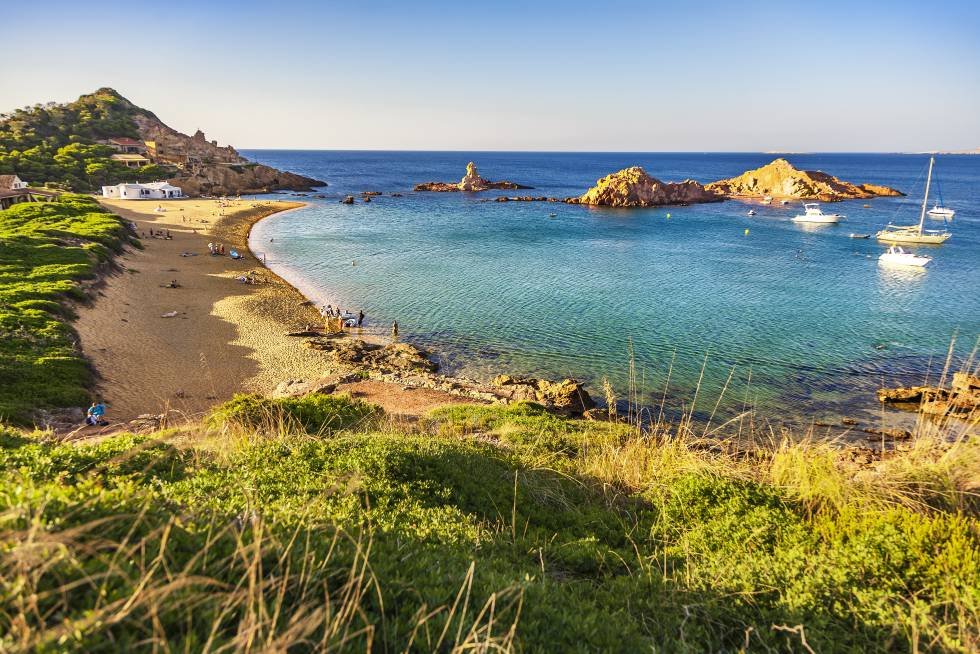
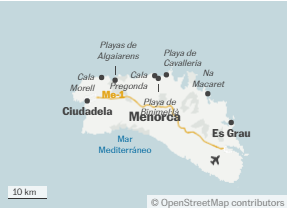
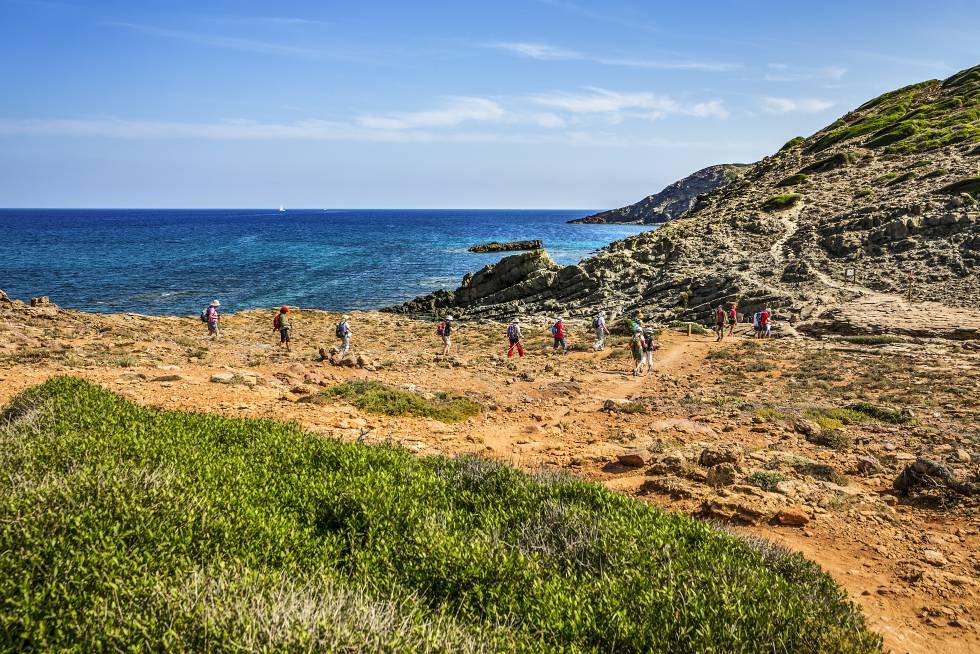
In general, the north coast is more rugged and its beaches can be harder to reach. Cavalleria is an exception: a path with some changes in level leads to an unspoilt beach nearly 500 metres long, with coarse sand and a wonderfully open feel. Equally natural, Binimel·là has a main beach approached by car, with several smaller coves to the right along the Camí de Cavalls, the coastal path we return to below. Na Macaret is a good option for families. For a striking change of scenery, Cala Pregonda combines reddish sand, clear water and unusual rocks rising from the sea. The effort of getting there is soon forgotten. Near Ciutadella, the unspoilt Algaiarens beaches, Dels Tancats and Des Bot, reward the roughly 20-minute walk from the car park. The original feature also highlighted Ivette Beach Club in Cala Morell for its privileged position and views.
On the south coast, easily reached Es Canutells is an inviting introduction to finer white sand and transparent water. Binigaus, near Sant Tomàs, has a similarly unspoilt appearance. The original feature suggested parking near the popular beach restaurant Es Bruc and stopping for steamed mussels. At Cala en Porter, it highlighted the cave route offered by Kayak Menorca: a three-hour outing beside cliffs and caves such as d’en Xoroi, whose terrace features on so many postcards, la Llum and Sant Josep, continuing to Cales Coves, long associated with naturism and a bohemian atmosphere. Nearby Son Bou also offers opportunities for water sports. Check current opening times and excursion details with the providers.
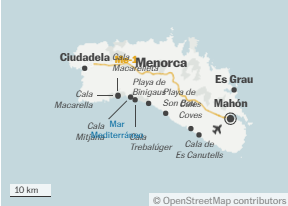
Cala Macarella and Cala Macarelleta are almost connected. They may be Menorca’s most photographed summer beaches, and the reason becomes clear as soon as you arrive. Vertical limestone walls shelter turquoise water, bordered by white sand and green pines. Crowds can make a visit less peaceful, but in September, for example, a day can slip by almost unnoticed. Cala Mitjana shares much of that beauty. For a more demanding walk, steps among the rocks and pines to the left lead towards Cala Trebalúger. The long, sometimes challenging path ends at a wonderfully untamed cove, its very lack of polish part of the reward. Other names to remember include Cala Turqueta, Es Talaier, Fustam and Cala Tortuga. Reaching these beaches is another chance to immerse yourself in the landscape, like returning to a familiar poem and finding something new. Salt air, pine, rock and sand bring everything back to the senses. The balance between contrasting natural elements creates memories that will outlast the visit itself.
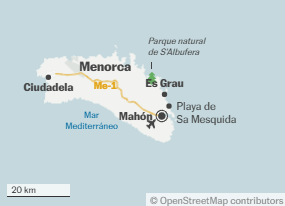
When winds are not coming from the north, east or north-east, Sa Mesquida, just beyond the village of the same name north of Mahón, can be an excellent choice. It feels like a world apart despite being so close to town. Further along the east coast, the little village of Es Grau, within S’Albufera des Grau Natural Park, has a beach with very shallow water that appeals to families with young children.
What to know about Menorca
Beyond the beaches, several traditions are woven into everyday life on Menorca: dry-stone walls, part of a World Heritage craft tradition; patron saint festivities with horses at their heart; and the island’s distinctive wild-olive wood gates. There is much more to discover.
01 Camí de Cavalls. This network of tracks allows you to follow the coast on foot, horseback or by bicycle. The original feature credits work by architect and landscape designer Isabel Bennasar’s studio with helping restore the route. She argues that its character depends on balancing enjoyment of the countryside with its protection. In architecture too, she sees the recovery of traditions and reuse of outdated buildings and infrastructure as ways of creating projects that belong in their setting.
02 Lighthouses. Punta Nati, Cavalleria and Artrutx are evocative landmarks along the coast. Favàritx stands out for its scale and setting; built in 1922, it served ships travelling between Algeria and Marseille. Martí i Pol dedicated a poem to this corner of the island, imagining it as a place where the world might end or begin.
03 S’Albufera des Grau. The natural park includes a lagoon, Illa d’en Colom and Cape Favàritx. Across more than 5,000 hectares, its five nature reserves bring together wetlands, farmland, woodland and a remarkable coastline. One rewarding walk follows the Camí de Cavalls from Favàritx towards Es Grau, passing Cala Presili and Cala Tortuga. The original feature describes a six-kilometre stretch through unspoilt coast and dunes, among reeds, junipers, marram grass and sea holly, with beautiful beaches along the way.
04 Talaiots. In Mô, Serrat’s musical tribute to Mahón, a talaiot evokes the island’s long history and its watch over the sea. These prehistoric stone monuments are part of Menorca’s remarkable archaeological heritage. The Naveta des Tudons is one of its most striking buildings; settlements such as Talatí de Dalt, Torre d’en Galmés, Torralba d’en Salort, Trepucó, Son Catlar and Sant Agustí Vell offer further insight into that distant past.
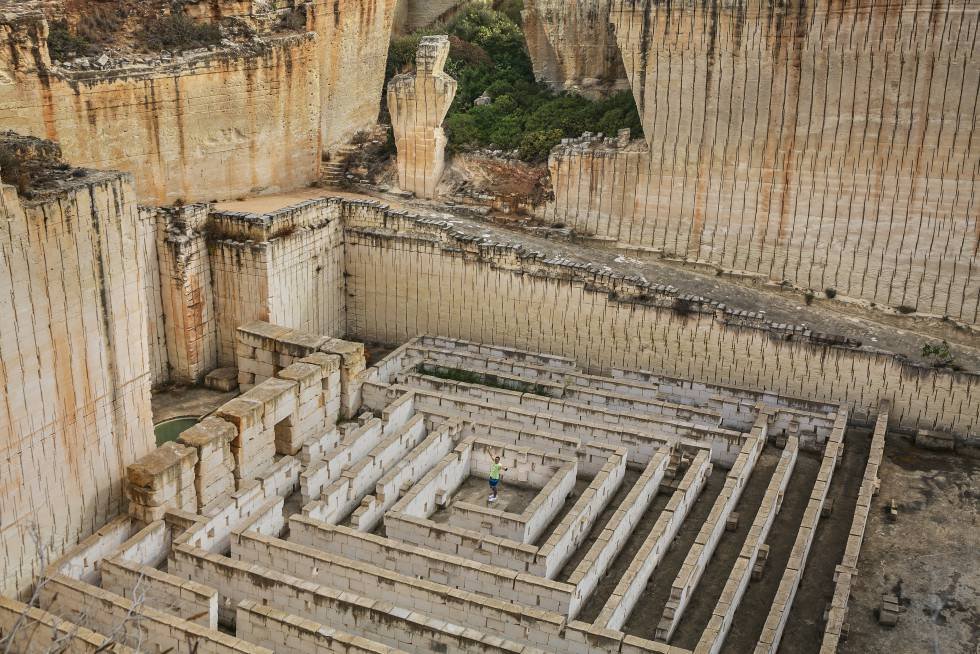
05 Marès stone. This local sandstone gives historic buildings in Ciutadella and Mahón much of their character. To explore its story, visit Lithica – Pedreres de s’Hostal, a distinctive site formed by quarries from different periods. The stone remains a source of architectural inspiration: in 2018, Ensamble Studio designed the Ca’n Terra house within a quarry.
06 Caldereta. Lobster stew inspires a devotion much like the island’s beaches: ask for one recommendation and you may receive twenty. Starting a bowl is a delight; finishing it is almost a sorrow. Fornells is closely associated with this dish, once a fishermen’s meal. The original feature suggested Es Cranc, Es Port, Sa Llagosta and Can Tanu as places to try it.
07 Pomada. Xoriguer gin is another island emblem, rooted in the British legacy. Mixed with lemon, it becomes the traditional drink of the local festivities. Served very cold, it can be deceptively easy to drink.
08 Llocs. These country houses or agricultural estates are a familiar sight on the higher ground inland, recognisable by their traditional architecture and white walls.
Two capitals
In the east of the island, Mahón is Menorca’s present capital. Its natural harbour, around six kilometres long, is one of Europe’s largest, and a walk beside it is reason enough to visit. Within the same harbour lies Cales Fonts in Es Castell, a waterside enclave of restaurants and fishing heritage. In Mahón’s old town, highlights include the Teatro Principal, an opera house dating from 1829, and the Claustro and Peix markets, where locals and visitors browse cheeses, sobrasada, ensaïmadas and fish. The original feature highlighted ceramicist Blanca Madruga and painter Pol Marban as examples of the town’s arts and crafts scene. It also welcomed improvements to central streets, particularly the pedestrianisation of Bastió, and changes to traffic around S’Esplanada promoted by the residents’ association, making the centre more pleasant to explore on foot.
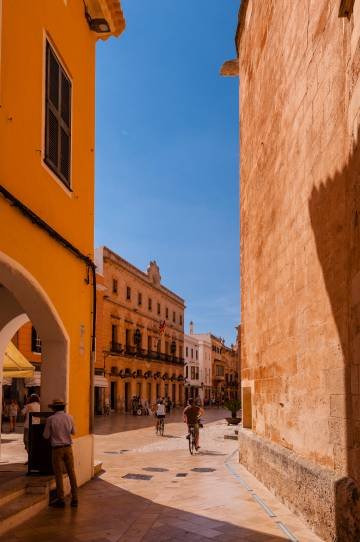
At the opposite end of the island, just 46 kilometres away, lies Ciutadella. Its role as the former capital, before British rule, helps explain the wealth of historic buildings: the Salort and Torre-Saura palaces, the town hall with its generous viewpoint, and the Cathedral of Santa Maria. Its medieval streets reward a long wander, especially after a breakfast panet with sobrasada and cheese at Café Imperi.
In lively Plaça des Peix, the original feature recommended Ulisses for a leisurely aperitif that might turn into lunch and an unhurried afternoon. It also suggested making time for Smoix or Es Tast de na Silvia, and a conversation with locals at Sa Prensa. Contemporary architecture offers another view of the island: the Santa Rita care centre by Manuel Ocaña, the Sa Vinyeta hostel by Ripoll-Tizón, and Marina Senabre’s minimalist Casa E in Es Mercadal.
At the end of the day, a beach or terrace becomes a place to look up at Menorca’s star-filled sky and recall the colours and scents of daylight. The island’s ability to preserve its character is part of its enduring appeal. For those who fall under its spell, the night sky seems spacious enough for all the heavens imagined in Jaume Sisa’s music.
More ideas from the original feature
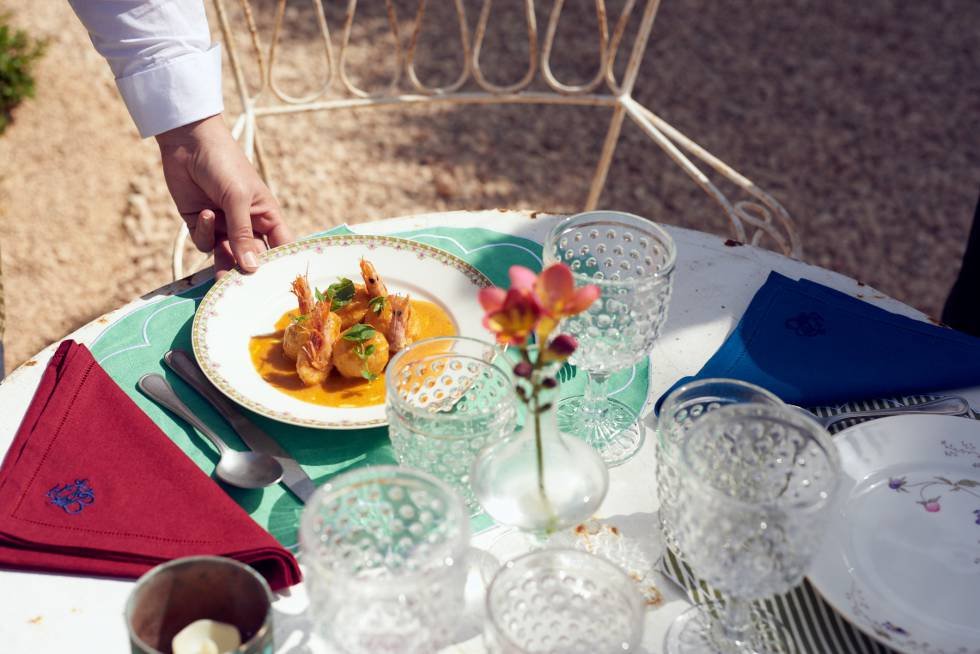
These suggestions are retained from the archive article. Check current opening times, menus and availability directly.
- Can Bernat des Grau, on the Maó–Fornells road: a restaurant with its own boat, a short menu and fresh fish (650 97 46 85).
- Balear is a Ciutadella classic, joined in the original recommendations by its sister restaurant Pins 46.
- La Caraba, in Sant Lluís, was highlighted for its Menorcan character.
- Can Los, in Es Castell, was recommended for lobster with fried eggs and chips (971 15 73 73). On the waterfront, the feature also singled out Trébol.
- In central Mahón, Ses Forquilles was described as closed until the following autumn at the time of writing. The same team ran Rais in the harbour, noted for rice dishes, and oversaw the restaurant at the then newly opened Cristine Bedfor hotel.
- Sa Sucreria, in Es Mercadal. The word ensaïmada comes from saïm, the pork fat used in the pastry. Alongside the classic version, the feature recommended one filled with sobrasada.
- Cap Roig combines a view over Sa Mesquida cove with Menorcan cooking, according to the original feature.
- For culture beyond the table, the Ca n’Oliver cultural centre explores Mahón’s importance during the periods of British rule. In Ciutadella, Vidrart gallery exhibits modern and contemporary art and supports local artists.